There's
over 5 trillion pieces of plastic floating on the surface of the ocean.
Keep in mind that this is what is floating on the surface. I know
someone who was part of a study being conducted by scientists, and I
learned that climate change and global warming is also happening in the
ocean. All of those tiny bits of plastic that become fine as sand are
reflecting heat from the bottom of the ocean. Heating up the ocean and
changing the currents of water, which also changes the currents of the
air moving on the ground above.
I have been thinking about these things for much of my life. I always thought that there were huge currents in space, wavelengths that were too long to measure, that did not have a beginning or end but that were more like the ocean and that is what kept planets spinning and wobbling in a steady sort of way. But waves can change depending on the resistance of what it went through or had to go around. I called them spatial waves. I just found a post about them.
People think that just because nobody sees you polluting the planet or just because it happens underground or in the ocean that is never happened. But traces of the truth are everywhere. All throughout our human history. And here we are. The resources we have are precious, the are finite and they are worth a lot more than money or power.
Ever heard of cutting off your nose to spite your face? Its an old expression. Well, we are dumping crap into the ocean, into the air, into the ground, into the aqua fir, piercing through that tiny OZone layer every time we go out into outer space and people remain oblivious. If I don't see it, it never happened. If I'm not caught, I didn't do it instead of just figuring out what the next right thing is to do and then doing it. But we'd rather kill each other with war and toxic poisons and bullshit then treat each other with respect and taking good care of our planet, our mother and our father for crying out loud.
I just did a search on spatial waves....
Rock topography causes spatial variation in the wave, current and beach response to sea breeze activity
Abstract
We hypothesized that beach profiles that are perched on natural rock structures would be better protected from waves and currents than profiles that are not fronted by rock. In southwest Western Australia many beaches, such as at Yanchep, are perched on Quaternary limestone. Yanchep Lagoon is fronted by a low-crested limestone reef that partially encloses a coastal lagoon. The spatial variation of waves and currents around the rock structures were quantified during the sea breeze cycle at locations: (1) offshore; (2) 20 m seaward of the reef; (3) inside the lagoon; and (4) in the surf zone. The spatial variation in the beach profile response was measured at two beach profiles: (1) the Exposed Profile that was not fronted directly seaward by outcropping limestone; and (2) the Sheltered Profile which was fronted seaward by submerged limestone at 2 m water depth and that was near the lagoon exit at the end of the limestone reef. The Sheltered Profile had greater volume changes during the cycle of the sea breeze whilst the Exposed Profile recovered more by overnight accretion when wind decreased. The lagoonal current drove the strong response of the Sheltered Profile and may have contributed to the lack of overnight recovery of the beach together with the seaward rock formation impeding onshore sediment transport. The different direction and speed responses of bottom-currents in the surf zone fronting the two profiles reflected the local variation in geology, the influence of the jet exiting the lagoon, and wave refraction around the reef that was measured with GPS drifters and wave-ray tracing using XBeach. Major spatial variation in waves, currents and beachface behavior at this perched beach shows the importance of the local geological setting.
Holy Shit! I remember, it had to be a few years after the brain injury, and I all of the sudden thought about spatial waves, like currents. I used to love to study Einstein. I started when I was about 12, reading the Theory of Relativity. But I grew to love physics. It dovetailed with studying Taoism and Yoga. I was intrigued by the thought that everything was connected. Always and in a continuum. I couldn't have said what it was bath then but I started drawing these pictures on the memory board of my refrigerator. I was so excited and couldn't wait to talk to my kids about it. I started picking up papers and drawing pictures. Oh man... do you have any idea how exciting this moment is right now.
See planet does spin and it does wobble.
The closest I could get to why it spins was centrifugal force but then when I realized, this is so cool
I was painting Quiet Desperation in the moonlight on the farm...
 I was
looking at the Milky Way and I was thinking... there is no such thing
as empty space. Because even what might contain it becomes a part of
it. So space was more like wave lengths. Like these huge waves that
had a rhythm and motion, just like our speech any living thing has waves
and frequencies... so we are not isolated. I mean, I think feeling
really isolated is what gave me the heart to see it. We were never
alone because we were always connected to everything all of the time.
Being and Becoming.
I was
looking at the Milky Way and I was thinking... there is no such thing
as empty space. Because even what might contain it becomes a part of
it. So space was more like wave lengths. Like these huge waves that
had a rhythm and motion, just like our speech any living thing has waves
and frequencies... so we are not isolated. I mean, I think feeling
really isolated is what gave me the heart to see it. We were never
alone because we were always connected to everything all of the time.
Being and Becoming.
I have been thinking about these things for much of my life. I always thought that there were huge currents in space, wavelengths that were too long to measure, that did not have a beginning or end but that were more like the ocean and that is what kept planets spinning and wobbling in a steady sort of way. But waves can change depending on the resistance of what it went through or had to go around. I called them spatial waves. I just found a post about them.
People think that just because nobody sees you polluting the planet or just because it happens underground or in the ocean that is never happened. But traces of the truth are everywhere. All throughout our human history. And here we are. The resources we have are precious, the are finite and they are worth a lot more than money or power.
Ever heard of cutting off your nose to spite your face? Its an old expression. Well, we are dumping crap into the ocean, into the air, into the ground, into the aqua fir, piercing through that tiny OZone layer every time we go out into outer space and people remain oblivious. If I don't see it, it never happened. If I'm not caught, I didn't do it instead of just figuring out what the next right thing is to do and then doing it. But we'd rather kill each other with war and toxic poisons and bullshit then treat each other with respect and taking good care of our planet, our mother and our father for crying out loud.
I just did a search on spatial waves....
Rock topography causes spatial variation in the wave, current and beach response to sea breeze activity
Abstract
We hypothesized that beach profiles that are perched on natural rock structures would be better protected from waves and currents than profiles that are not fronted by rock. In southwest Western Australia many beaches, such as at Yanchep, are perched on Quaternary limestone. Yanchep Lagoon is fronted by a low-crested limestone reef that partially encloses a coastal lagoon. The spatial variation of waves and currents around the rock structures were quantified during the sea breeze cycle at locations: (1) offshore; (2) 20 m seaward of the reef; (3) inside the lagoon; and (4) in the surf zone. The spatial variation in the beach profile response was measured at two beach profiles: (1) the Exposed Profile that was not fronted directly seaward by outcropping limestone; and (2) the Sheltered Profile which was fronted seaward by submerged limestone at 2 m water depth and that was near the lagoon exit at the end of the limestone reef. The Sheltered Profile had greater volume changes during the cycle of the sea breeze whilst the Exposed Profile recovered more by overnight accretion when wind decreased. The lagoonal current drove the strong response of the Sheltered Profile and may have contributed to the lack of overnight recovery of the beach together with the seaward rock formation impeding onshore sediment transport. The different direction and speed responses of bottom-currents in the surf zone fronting the two profiles reflected the local variation in geology, the influence of the jet exiting the lagoon, and wave refraction around the reef that was measured with GPS drifters and wave-ray tracing using XBeach. Major spatial variation in waves, currents and beachface behavior at this perched beach shows the importance of the local geological setting.
Holy Shit! I remember, it had to be a few years after the brain injury, and I all of the sudden thought about spatial waves, like currents. I used to love to study Einstein. I started when I was about 12, reading the Theory of Relativity. But I grew to love physics. It dovetailed with studying Taoism and Yoga. I was intrigued by the thought that everything was connected. Always and in a continuum. I couldn't have said what it was bath then but I started drawing these pictures on the memory board of my refrigerator. I was so excited and couldn't wait to talk to my kids about it. I started picking up papers and drawing pictures. Oh man... do you have any idea how exciting this moment is right now.
See planet does spin and it does wobble.
The closest I could get to why it spins was centrifugal force but then when I realized, this is so cool
I was painting Quiet Desperation in the moonlight on the farm...
Over
five trillion pieces of plastic are floating in our oceans says most
comprehensive study to date on plastic pollution around the world
theguardian.com|By Oliver Milman
And then there is hope. I wonder what the labels are on these plastic items. Where are they coming from? Cruise ships? From garbage freights? It would be good if we could be informed about the sources of this garbage.
And then there is hope. I wonder what the labels are on these plastic items. Where are they coming from? Cruise ships? From garbage freights? It would be good if we could be informed about the sources of this garbage.
19-year-old inventor finds way to clean up the world’s oceans in under 5 years time
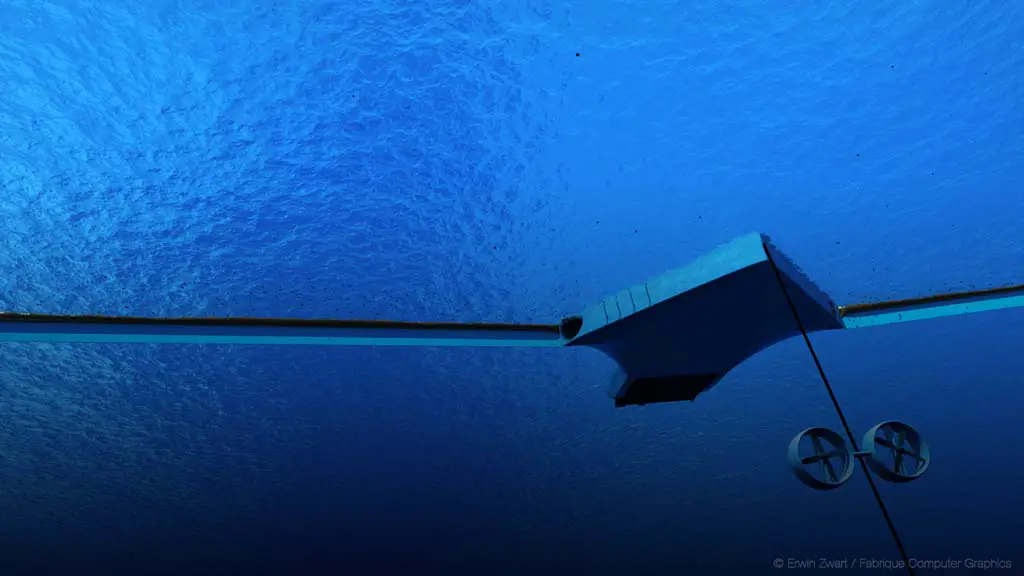
Previously the idea of cleaning up the world’s oceans with their vast accumulations of disposed plastic material was considered an impossibility. Now a 19-year-old inventor says he and his foundation has a way to clean up the world’s oceans, and not only does he say we can do it, but that we can do it in five years time and produce a profit from it.
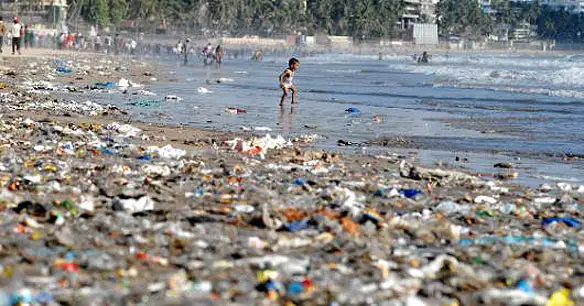
It is called the ‘Great Pacific Garbage Patch’ or sometimes the “Pacific Trash Vortex”, and it is a massive collection of plastic particles accumulating in the Pacific. Other oceans have their own collections of plastic wastes as well; furthermore, most of the debris in our oceans are plastic materials that accounts for approximately 90% of all the waste debris.
Scientists have considered all manner of ways how the debris could be retrieved but there was no clear answer for it.
Now a 19-year-old inventor by the name of Boyan Slat says we can remove nearly 20 billion tons of plastic waste with his concept he calls an ocean cleanup array. It is made from a massive series of floating booms and processing platforms that gradually suck in the floating plastic like a giant funnel.
The angle with how the array is set up allows all of the plastic to go to where the platforms processing centers are floating. At the platform processing area it would separate the naturally occurring life such as plankton an only keep the plastic materials to be recycled.
 What is most impressive about the array is that once it goes
operational it would clean up the oceans in only 5 years time! He also
makes a point in saying that due to the vastness of our oceans most do
not know how badly polluted the oceans really are.
What is most impressive about the array is that once it goes
operational it would clean up the oceans in only 5 years time! He also
makes a point in saying that due to the vastness of our oceans most do
not know how badly polluted the oceans really are.“One of the problems with preventive work is that there isn’t any imagery of these ‘garbage patches’, because the debris is dispersed over millions of square kilometers,” Slat says on his website. “By placing our arrays however, it will accumulate along the booms, making it suddenly possible to actually visualize the oceanic garbage patches. We need to stress the importance of recycling, and reducing our consumption of plastic packaging.”
Slat was able to come up with the idea while in school, and so he wrote a paper on his concept. Once Slat’s paper was published it immediately caught the attention of many marine experts. His paper won all manner of prizes, which included the Best Technical Design 2012 from the Delft University of Technology.
When he and others realized that the concept would work he took a leap of faith and created a non-profit organization he calls The Ocean Cleanup Foundation. This group will focus on the goal of developing his invention, raise funds for it and make it operational as soon as possible. His concept would save numerous aquatic species of fish and help reduce PCB and DDT containments affecting all of us. Best of all it operates on the power of the sun and by the oceans themselves.
Not only is Slat’s concept self-powered, it would also be very profitable from the all the recycling, which is estimated in the amount of 500 million dollars (U.S.) per year.
According to Slat’s website it “would make in fact more money than the plan would cost to execute. In other words; it’s profitable.”